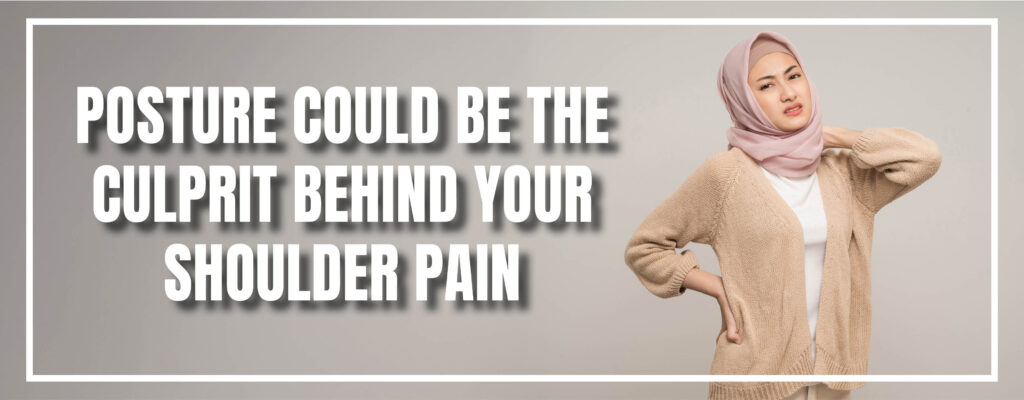
No one likes dealing with shoulder pain. The discomfort and immobility can prevent you from doing daily activities like grabbing something off a high shelf or reaching up to brush your hair. So, when your shoulder starts hurting, it’s important to figure out why.
Often, shoulder pain stems from an injury. For example, take rotator cuff tears, in which the muscles and tendons that wrap the shoulder become damaged: these injuries are common and can result from a sudden traumatic injury like a fall or develop gradually.
However, sometimes, shoulder pain might not have such a clear-cut cause. One of our patients learned this for herself–we’ll call her Diana. She was dealing with persistent shoulder pain and couldn’t figure out why. Fortunately, the physical therapists at MMA Sports Rehab were on the case.
And the culprit? It turned out to be Diana’s posture.

Meet Diana, Receptionist Extraordinaire
Diana had worked as a receptionist and administrative assistant for years. She enjoyed her work, but it did require her to spend long hours sitting in front of a computer as she sifted through spreadsheets and calendar appointments.
Her issues with shoulder pain began gradually. They had always been a little stiff, but the restricted range of motion had worsened in the last few months. She also noticed tightness in her chest and twinges of pain throughout her shoulders and neck.
Diana tried to ignore her symptoms at first, thinking they’d eventually go away on their own. Instead, they became more frequent, worsening enough that Diana struggled to sit at her desk long enough to get any work done. That was when she came to visit us.
Our Physical Therapists Were on the Case
As always, we started Diana with a comprehensive assessment to help us understand the root cause of her discomfort. We took a health history, talked to her about potential injuries, and conducted several movement screens–including a postural screen.
The postural screen was where we made headway. After reviewing Diana’s posture while she was sitting, standing up, and moving around, we noticed the following:
- She held her head forward in relation to her shoulders, a stance called “forward head posture.”
- She tended to round her shoulders, giving her slight kyphosis, or a hunched posture, in her upper back.
- Her shoulder blades were protracted away from her spine.
The signs were clear: Diana had developed upper cross syndrome.
Upper cross syndrome is a condition marked by postural changes that have a waterfall effect throughout the body. Diana’s postural impairments had impacted the muscles in her upper back and shoulder girdle. As a result, the movement in her upper body became impaired, leading to her pain and mobility restrictions.
A Personalized Solution to Lasting Pain Relief
Now that we understood why Diana was experiencing shoulder pain, we could develop a customized treatment to correct her posture and address the muscular impairments and imbalances that had led to her symptoms in the first place.
The foundation of Diana’s treatment was a comprehensive therapeutic exercise program. We began by improving her shoulder’s range of motion through simple mobility exercises.
After a few weeks, Diana was ready to begin strengthening the affected muscles. Using equipment like resistance bands and weights, we guided Diana through targeted exercises that addressed muscular weakness and imbalance.
Throughout her program, we also helped Diana improve her overall posture. Like many people, she thought postural improvements were about “sitting up straight.” In reality, she needed to keep her spine aligned as she moved through different postures throughout the day.
Because Diana had a desk job, we emphasized the importance of changing her posture regularly by taking quick breaks. Diana began using a timer to remind herself to get up every 30 minutes or so and walk around the office.
While it took a little effort on Diana’s part, eventually, her pain receded, and her shoulders were more mobile than they’d been in years. To make sure she didn’t relapse, we provided her with exercises to do at home to keep her upper body strong.
Is Your Posture Causing You Pain?
Diana learned just how important posture is. If you’re struggling with persistent shoulder pain, call the team at MMA Sports Rehab. We’ll dig down to the source–and give you the guidance you need to correct the issue.

Dr. Ujjwal’s Tips for Posture
???? “Phone Down, Chin Up”
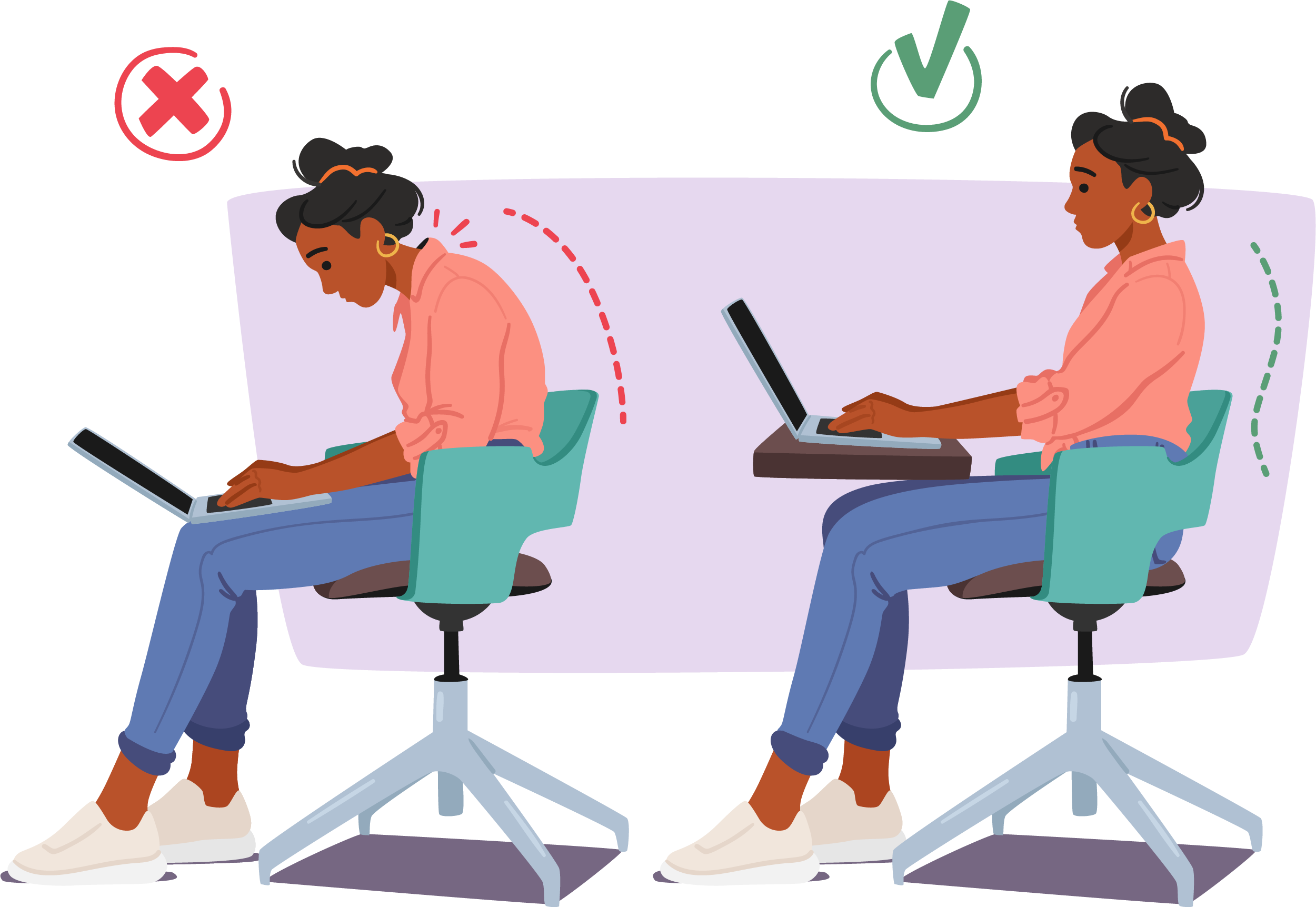
Constantly looking at your phone? That forward head posture can wreak havoc on your shoulders. Keep your screen at eye level to save your neck—and your shoulders.
???? “Sit Like a Boss”
Slouching at your desk all day? Sit with your feet flat, hips slightly higher than your knees, and shoulders relaxed. Pretend you’re wearing an invisible crown.
????️ “Posture Check Every 20 minutes”
Set a timer or pair it with water breaks. Stand tall, roll your shoulders back, and align your ears over your shoulders. Easy reset!
???? “Wall Angels = Shoulder Angels”
Stand with your back against the wall and try to slide your arms up like a snow angel. Great for posture and shoulder mobility—no wings required!
????♂️ “Stretch the Chest, Love the Back”
Open up those tight pecs with doorway stretches, and strengthen your mid-back with rows or band pull-aparts. Balance front and back muscles to keep shoulders happy.
???? “Backpacks, Not Purses”
If you’re lugging a bag on one shoulder, switch it up—or better yet, wear a backpack to keep things centered and balanced.
???? “Mirror Check, Not Just for Hair”
When lifting weights or doing any activity, glance in the mirror. Are your shoulders creeping up to your ears? Time to relax and reset.
????️ “Netflix with Neck Support”
Slouching into the couch? Prop up a pillow behind your upper back and neck so you’re supported and not curled like a shrimp.
????♀️ “Walk Tall, Swing Free”
Walk with intention—head up, chest open, shoulders relaxed. Let those arms swing naturally for rhythm and shoulder mobility.
???? “Your Posture is a Habit, Not a Pose”
Good posture isn’t stiff—it’s dynamic. Think of it like athletic form: balanced, strong, and ready for action. During work every 20 minutes, change position.

A Special Thanks from MMA Sports Rehab
“We now have 378 Google 5-star reviews and more than 700 5-star reviews. We want to show our gratitude to our well-wishers, friends, family, community, and our beloved patients for their continued trust with their health care/rehab. We love you, and we are here because of YOU! Thank You!!!” – MSR Family

Dr. Ujjwal’s Funny Tips for Proper Posture
????♂️ Stand like a superhero – Chest up, shoulders back, and pretend you’ve got a cape. No one slouches in Gotham 😉
???? Sit like you mean it – No shrimp posture! Keep your back straight, feet flat, and pretend your chair is judging you.
???? Core strength = posture power – Weak core? Wobbly posture. Planks > back pain.
???? Tech neck is real – Hold your phone up, not down. Your spine isn’t a candy cane.
????♂️ Move it or lose it – Don’t stay frozen at your desk like a mannequin. Get up, stretch, and remind your body it’s not furniture. Every 20 minutes, change your position regularly.
⚖️ Balance the load – Carrying a heavy bag on one shoulder? Congrats, you’re training for asymmetry. Even it out!
???? Posture check! – Randomly remind your friends to fix their posture. Annoying? Yes. Helpful? Also yes.
Good posture = fewer injuries and less pain. So straighten up and save yourself a trip to the PT! ????

Our Patients Get Great Results
“I’ve spent years in and out of different PT establishments for chronic pain in my right shoulder, this pain limited my range of motion and never allowed me to comfortably push myself to the next level in my workouts, I was pushing myself in pain therefore making the issue at hand even worse day after day. I was dismissed my multiple PT’s previously due to my range of motion being “good enough” but no one seemed to understand or care about the pain I was still feeling even though the range of motion was better. I finally researched the best PT practice in Arlington and read through multiple testimonials that sounded like their chronic issues were fixed after coming to MSR and completing a comprehensive treatment plan. I’ve been able to be the most pain free since middle school (I’m 27), I remember having this chronic issue all throughout high school, college and young adulthood. I am optimistic that at the end of my PT regimen here at MSR I will be pain free and not coming back to PT for the same issue year after year. I am looking forward to pushing myself more in the gym without pain and progressing towards my fitness goals this summer and onward. I highly recommend MSR if you are an athlete looking to become pain free and progress towards your sports and fitness goals.”
-Maria V.
Clinic News
Dr. Ujjwal met his great friend Dr. Thakral, MD : Dr. Thakral is a fellowship-trained interventional pain medicine physician at International Spine, Pain & Performance Center, Arlington, VA at Virginia Hospital Center. He has a great mind, is an awesome doctor and patients love him.


Meet Dr. Ricky ! He is our current Intern for Summer 2025 from Marymount University. He is a recent grad from Doctor of Physical Therapy Program From Marymount University. “Hi, my name is Ricky Nguyen and I recently earned my Doctorate in Physical Therapy from Marymount University! I’m passionate about working with diverse patient populations and committed to delivering personalized, evidence-based care. Outside of the clinic, I enjoy weightlifting, traveling, and most importantly… food!” If you see him in clinic – please say hi to him 😉
Dr. Ujjwal met his very good friend Dr. Evan Gray, DO. He is a neurologist at Integrated Neurology clinic and helps patients with neurological and movement disorders. He is a fellow FDM practitioner which Dr. Ujjwal shares very closely with his clinical practice. They always have great meeting and Dr. Gray is definitely a sharp mind and amazing human being.


Get Back to Your Best Self at MMA Sports Rehab
Rediscover your strength and get back to your best self at MMA Sports Rehab! Schedule your next appointment today and experience the top-notch care that helped you before.
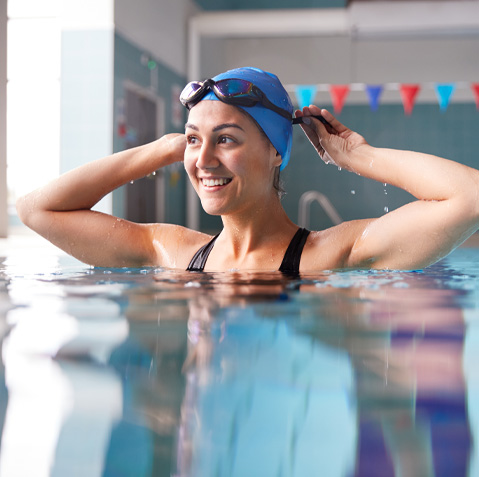
5 Pool Exercises For a Full-Body Workout
Exercising in water can provide a great full-body workout without some of the drawbacks of land-based exercises.
1. Walk in water. It targets your arms, core, and lower body. Keep your arms in the water and move them as you walk. Engage your core and stand tall.
2. Water arm lifts. Using foam dumbbells will help add more resistance. Stand in water up to your shoulders. Hold the dumbbells at your side, with your palms facing up. Draw your elbows in close to your torso as you lift your forearms to the height of the water. Rotate your wrists to turn your palms facedown. Lower your arms back to the starting position. Do 1-3 sets of 10-15 reps.
3. Lateral arm lifts. This exercise, which targets your upper body, is also best done with foam dumbbells. Stand in water up to your shoulders. Hold the dumbbells at your side. Raise your arms to the side until they’re level with the water and your shoulders. Lower your arms back down to your sides. Do 1-3 sets of 8-14 repetitions.
4. Back wall glide. This exercise helps to activate the muscles in your core and lower body. Hold onto the pool ledge, tuck your knees into your chest, and press your feet into the wall. Push off from the wall and float on your back as far as you can. Draw your knees into your chest, press your feet down to the bottom of the pool, and run back to the wall. Continue this exercise for 5-10 minutes.
5. Leg kicks. This exercise works the muscles in your core and legs. Use ankle weights to make it more challenging. Hold onto the pool ledge or hold a kickboard. Alternate flutter kicking, scissor kicking, breaststroke kicking, and dolphin kicking. Do each kick for 1-3 minutes.
Water workouts are an effective way to boost your cardio fitness while strengthening your major muscle groups, but as with any new exercise program, always speak to your physical therapist first. Contact MMA Sports Rehab to see if aquatic exercise is right for you!

Whole-Grain Penne with Spicy Shrimp and Broccoli
Ingredients:
- 1 (13.2 oz) box whole-grain penne
- 3 cups small broccoli florets
- 1/4 cup olive oil
- 1 bunch green onions
- 12 oz peeled, deveined shrimp
- 4 cloves garlic, finely chopped
- 1 tsp crushed red pepper

Directions:
Heat a large pot of salted water to a boil on high. Add the penne and cook according to package directions. Add the broccoli to pot 2 minutes before pasta is cooked. Before draining, reserve ½ cup cooking liquid. Meanwhile, in a 12-inch nonstick skillet, heat the oil on medium. Add the green onions and cook 2 min., stirring often. Add the shrimp, garlic, and crushed red pepper. Cook 4–5 minutes., until shrimp are cooked through, stirring occasionally. Remove from heat. In a large bowl, toss cooked penne and broccoli with shrimp mixture, adding some cooking liquid if needed. Season with salt to taste.
Meet Our Team

Dr. Ujjwal Shakya
Physical Therapist, DPT, DMT, SCS, FNCP

Dr. Brianna Wynn
PT, DPT, Barbell Rehab Method Certified, USA Weightlifting Coach Level 1 & 2 Certified

Dr. Barz Kim
PT, DPT, Cert. DN Level 1 & 2

Ayesha Samudralanka
Patient Service Specialist